Apps — 12-09-2026
- Role
- Client
- Date
- Website
Storia is an application that helps people discover remarkable art, architecture & history hidden throughout Rome. Instead of asking people to enter a museum, Storia turns the city itself into one.
Visitors can discover an artwork, listen to its story, explore questions and continue whenever they want. There is no starting time, no group to keep up with and no guide waiting for them to move on.
Art shouldn't depend on a museum ticket
The idea for Storia started with a simple observation. Many people in Rome wait for the first Sunday of the month to visit museums for free. They love art and history, but regularly paying for museum tickets, guided tours and cultural experiences quickly becomes expensive.
At the same time, Rome is filled with extraordinary art that can already be visited for free.
The artwork is accessible, understanding why it matters often isn't.
What if the city itself could become the museum, and everyone could have a guide in their pocket?
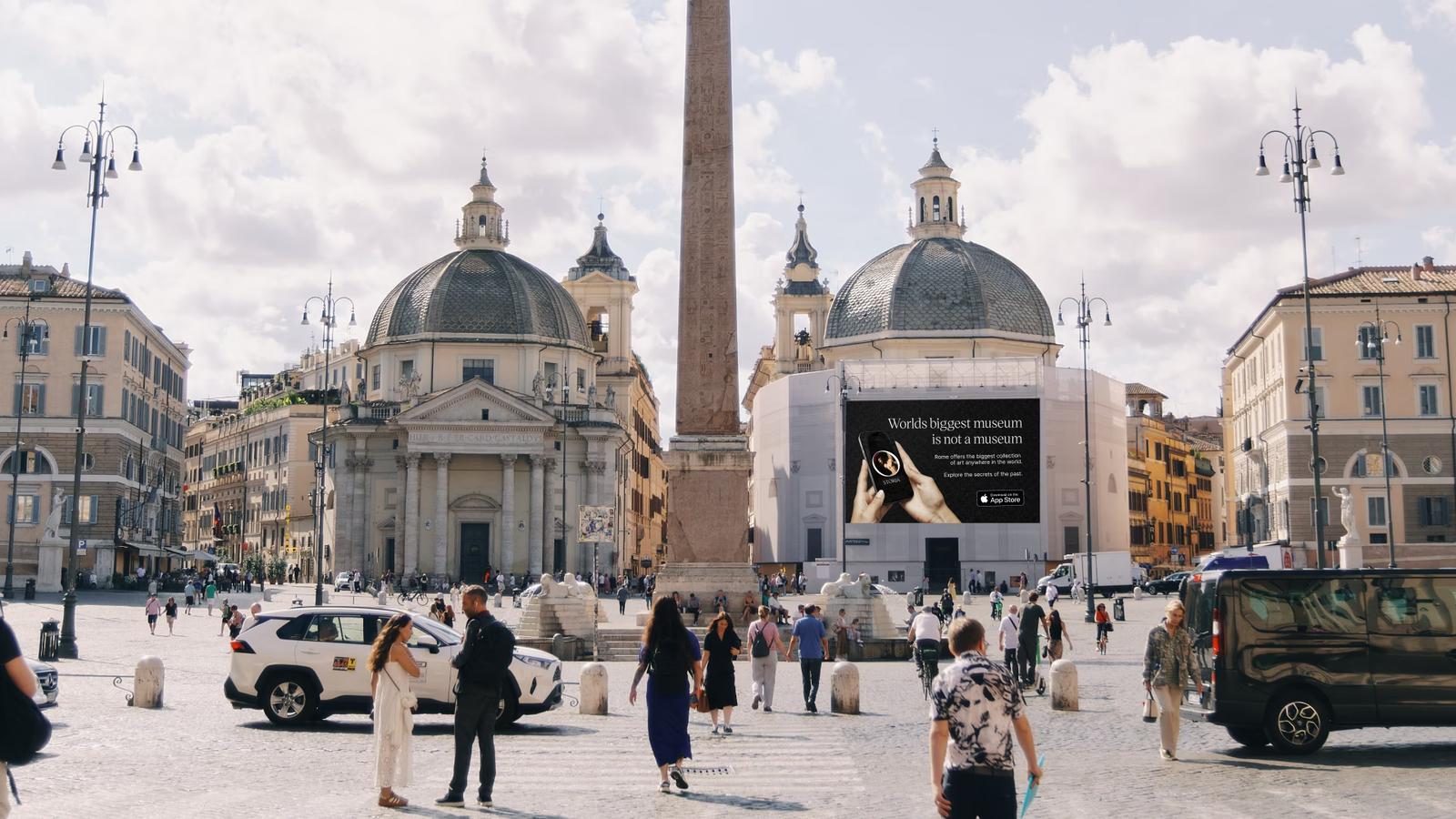
Designing for the one who thinks art is boring
Storia is not primarily designed for art historians.
The more interesting challenge is the sixteen-year-old standing in front of a Caravaggio who doesn't yet understand why they should care.
The goal isn't to make users consume as much information as possible. It is to create enough curiosity for them to look again.
A story might reveal why a beam of light matters, point towards a character hidden inside the composition or explain the controversy surrounding the artist. From there, the user can decide how deeply they want to continue.
Some will listen to everything. Others will skip ahead, explore questions or put the phone away and discuss the artwork with the person standing next to them.
All of those behaviours can be successful.
The screen should support the encounter with the artwork, not become the encounter itself.
From audio guide to interactive storytelling
Traditional audio guides are mostly linear. Press play, listen, move to the next object.
I wanted Storia to feel more like a conversation.
After parts of a story, users are presented with questions they can explore. Instead of requiring them to formulate a question themselves, Storia provides a small selection of relevant prompts based on the story they have just heard.
Initially I limited this to three questions. It kept the interface simple, but testing showed that three options were too restrictive for people who became genuinely interested in an artwork.
The solution was not to place more information on one screen. Storia still presents a maximum of three choices at a time, while allowing curious users to continue deeper into the subject.
The interaction stays simple while the content does not have to be.
Removing one of the most impressive features
An early version of Storia included a conversational AI agent connected to ElevenLabs. Visitors could ask questions freely and receive spoken answers.
Technically, it worked.
As a product decision, it didn't.
During testing I burned through approximately €20 in AI credits before I had even returned home. At scale, conversational AI would make the cost of every visit unpredictable. Charging someone €10 to make that model sustainable would contradict the original reason for building Storia.
There was another problem.
Churches and historic buildings have thick walls, inconsistent mobile reception and exactly the kind of environment where an internet-dependent experience can fail.
In this kind of environment internet-dependent experiences can fail. So I removed the AI agent. Kill your darlings.
Instead, Storia uses pre-generated questions and answers. AI can help generate relevant questions during the editorial process, but users aren't dependent on a live language model while standing in front of an artwork.
Identify masterworks
To improve the sense of freedom and user experience, we added the ability to simply aim your camera at a painting or sculpture and instantly recognizes the artwork. It knows the exact church through GPS location you are standing in. No QR codes, no physical markers. Pure visual alignment.
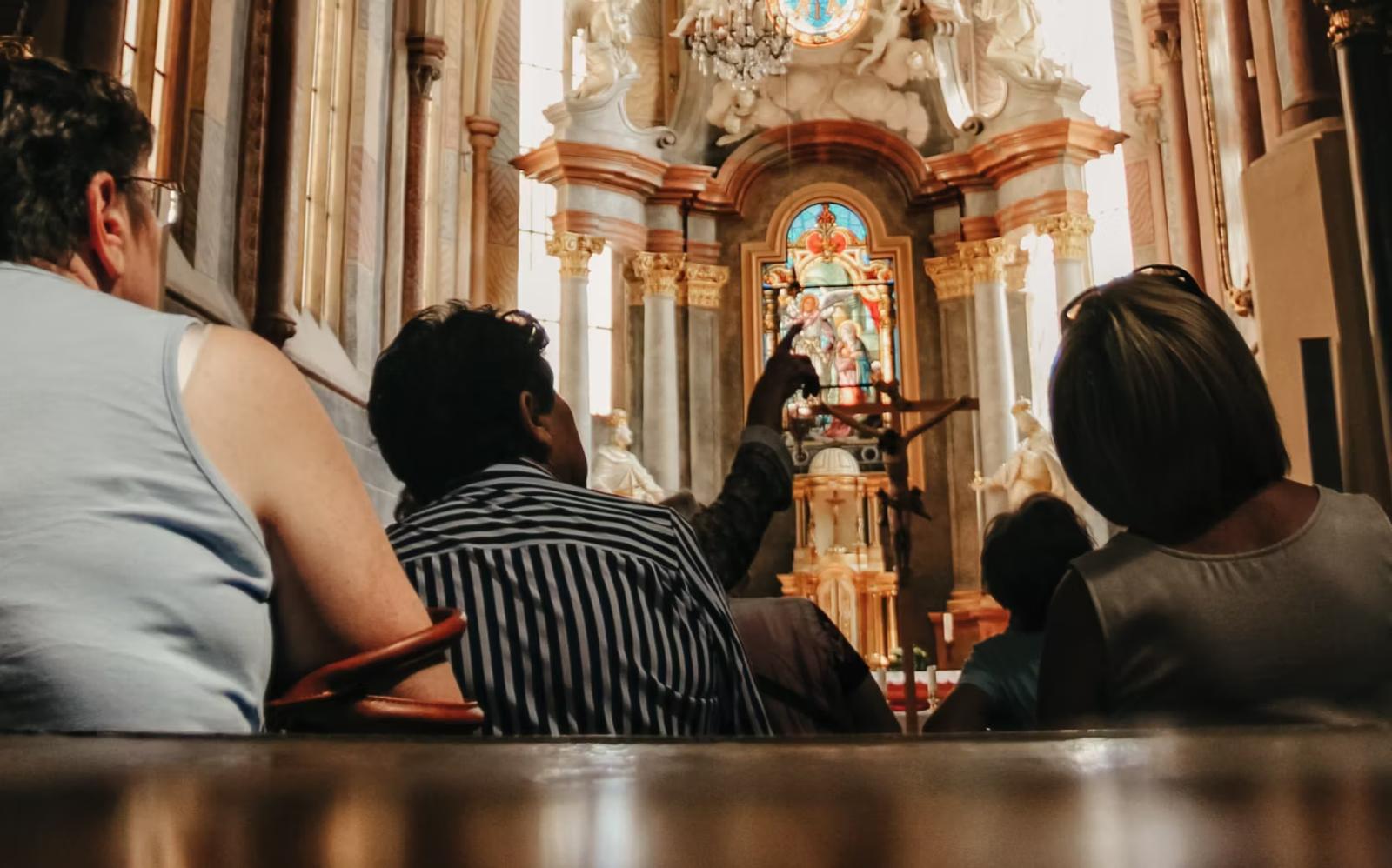
This needed lots of testing, going to the churches, during different times because it was quite hard to make it work in low-light chapels.
I wanted our app to be working even without internet, because big brick walls of cathedrals block connections.
So to have immediate audio playback, I came with the following solution:
Pre downloaded tours, when you start a tour, it will gradually download the predefined stories about the artwork that you are about to see.
Being able to ask questions, about interactivity
A dilemma. I needed interactivity to work because one might have questions about the origins of the artwork. Having a predefined system takes away the intelligence, so, I came up with the following: a list of up to 6 predefined questions that would be answered by our narrator. Lazlo.
AI Persona
I came up with a persona for our Narrator. To make her believable and act as a ‘real’ person, she needed a backstory. Since I have been watching nature series of BBC I have been drawn to the fantastic accent of the British. My persona needed to be from around Cambridge. By making sure her persona, backstory was in line with the AI systems in place, the AI knows what to generate and in what kind of tone.
Branding
Storia is about Rome, and it’s hidden artworks located in Churches, often in a dark environment, where peace and tranquility is present. People are respectful and are silent or whispering. To pay respect to the houses of god and connect to the city of Rome I came up with the logo in a Serif font - Victor Sans. The R is the same R that Rome’s municipality logo uses to connect with the city.
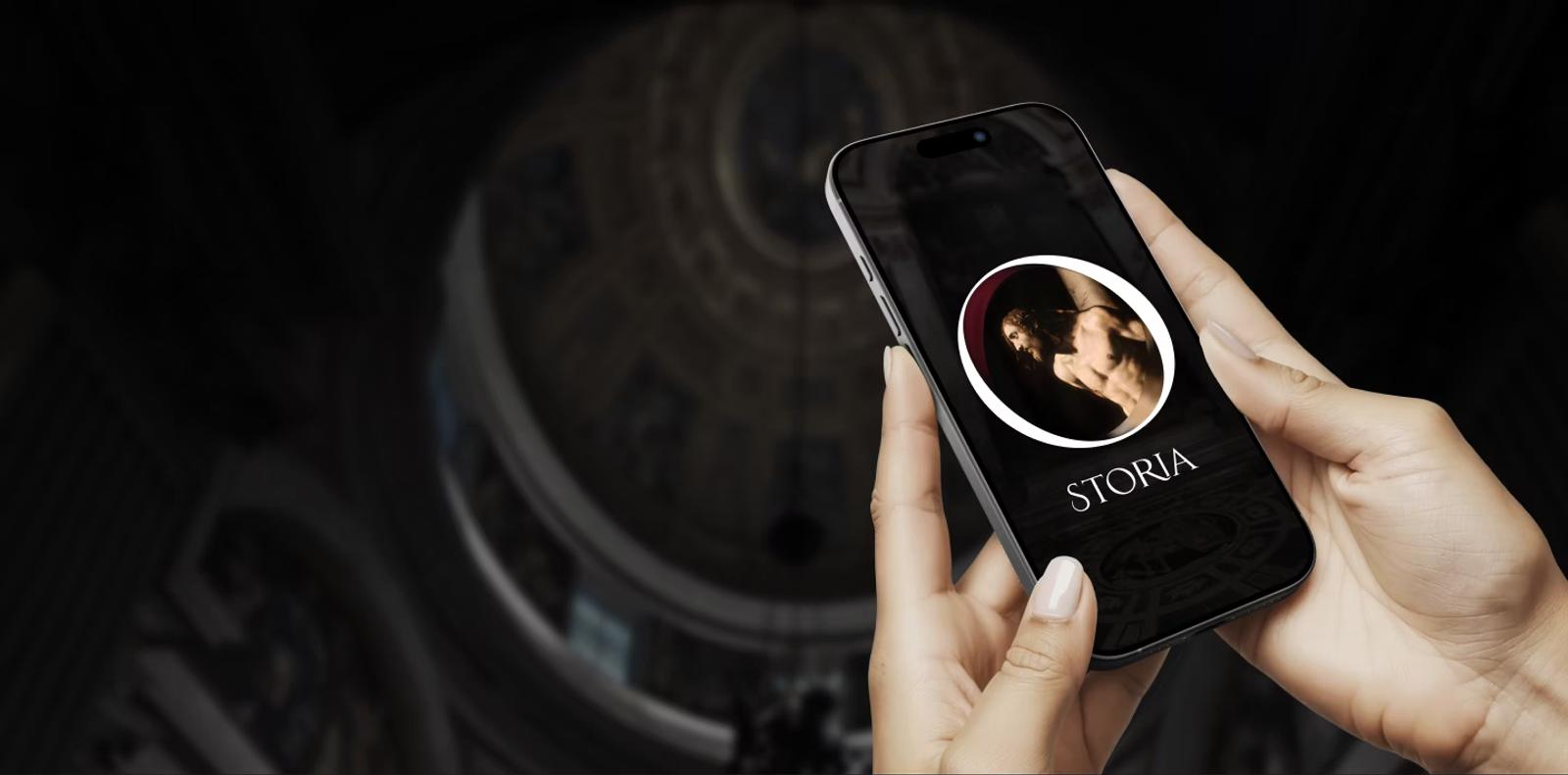
It’s a simple logo, but speaks for itself and can be seen from far. The ring is used as a connecting element that flows. It can also be interpreted to be an eye, that you use to see the artworks. My goal was to bring it’s exploring and learning potential of the App.
More projects